XNeuromorphic
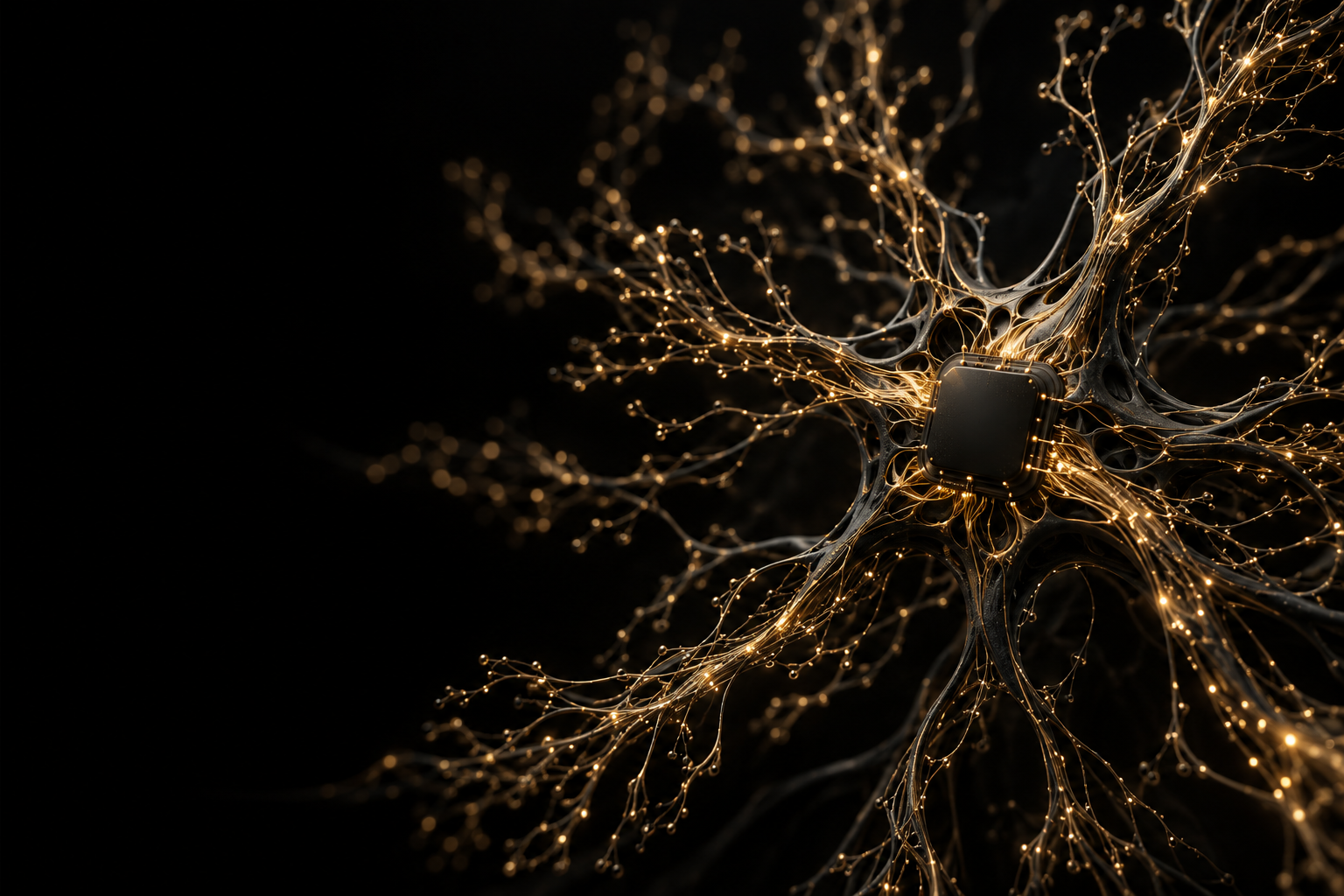
Conceptual artwork of golden neural filaments surrounding a dark computing core

ABYSON JOSEPH / INDEPENDENT PROJECT SPACE

Intelligence.
Inspired by nature.
Built on possibility.

I’m shaping research-led project concepts around spiking neural networks and event-driven AI: systems designed to respond to change with greater energy efficiency. Driven by an unwavering passion to challenge convention and explore what lies beyond today’s technology, I believe neuromorphic computing could transform how intelligent systems sense, respond, and adapt. I’m shaping applications for the Lava framework, targeting Intel Loihi—from anomaly detection to real-time perception and constrained optimization.

Independent exploration of brain-inspired computing, guided by a long-term vision for responsive, energy-efficient intelligence.

SPIKING NETWORKS / EVENT-DRIVEN COMPUTING03 PROJECT CONCEPTS
Brain-inspired computationApplication-led explorationOpen technical dialogue

01 / UNDERSTANDING NEUROMORPHIC COMPUTING

Inspired by the brain.
Responsive by design.

Neuromorphic computing takes inspiration from how biological neurons communicate. In systems such as Intel Loihi, artificial neurons exchange brief signals called spikes, responding to events as they happen.

CONVENTIONAL AI

Move the data.
Perform the calculation.

In conventional AI systems, processors and memory are typically separate, so data must move repeatedly between where it is stored and where calculations happen. This movement consumes energy and can become a performance bottleneck, particularly for demanding AI workloads.

NEUROMORPHIC COMPUTING

Bring memory closer.
Respond to events.

Neuromorphic architectures such as Intel Loihi bring memory and computation closer together. They also use event-driven processing, where artificial neurons exchange signals as events occur. This reduces unnecessary activity and data movement, creating opportunities for lower power consumption and faster responses.

Why neuromorphic computing matters for the future of AI.

As AI moves into robots, industrial equipment, and everyday devices, intelligence must work within tighter limits on energy, connectivity, and response time. Neuromorphic computing offers a promising way to address some of these constraints.

Which AI limitations can it help address?

  • High energy demand. Event-driven computation focuses activity on incoming signals, reducing unnecessary work in suitable sensing and inference tasks.
  • The memory bottleneck. Bringing memory and computation closer together reduces the repeated movement of data that costs time and energy in conventional architectures.
  • Delays in responding to change. Asynchronous processing can react to events as they arrive, supporting low-latency perception and control.
  • Dependence on cloud connectivity. Efficient local processing could help devices interpret signals and respond near the source, without sending every observation to a remote server.

The opportunity is especially compelling for always-on sensing, real-time perception, and selected optimization tasks. Benefits depend on the application, hardware, and implementation; neuromorphic computing complements conventional AI and does not solve every AI limitation.

Intel’s research overview

02 / PROJECT DIRECTIONS

Three questions.
A different way to compute.

From detecting subtle changes to making better decisions. These concepts define the applications I want to explore through neuromorphic computing.

01CONCEPT

SENSING & MONITORING

Neuromorphic
Anomaly Detection

Identifying unusual patterns in streaming sensor data before they become difficult to ignore.

Time-series signalsSpiking networks
Explore the concept

The application

Equipment monitoring through changes in vibration, temperature, or electrical signals.

First prototype

Use a recorded sensor dataset to compare a spiking neural network with a conventional anomaly-detection baseline.

What to evaluate

Detection accuracy, false alarms, and response time. Hardware energy measurements would require a later Loihi evaluation.

Discuss this project
02CONCEPT

EVENT-BASED PERCEPTION

Event-Based
Motion Tracking

Following movement through changes in a scene, using the timing of visual events.

Event-camera dataObject tracking
Explore the concept

The application

Responsive visual perception for robotics and systems that need to react to movement.

First prototype

Build a single-object tracking pipeline using recorded event-camera data, with a view to a later Loihi implementation.

What to evaluate

Tracking accuracy, response latency, and robustness across different movement patterns.

Discuss this project
03CONCEPT

CONSTRAINED OPTIMIZATION

Neuromorphic
Task Scheduling

Exploring how brain-inspired computation could assign work under real operational constraints.

Resource allocationLava optimization
Explore the concept

The application

Assigning tasks to limited resources while considering capacity, priorities, and deadlines.

First prototype

Formulate a small scheduling problem using Lava’s optimization library and compare it with a conventional solver.

What to evaluate

Solution quality, constraint satisfaction, and execution time as the problem size grows.

Discuss this project

Current stage: project concepts. Intel Loihi is the intended hardware target; no completed implementation or hardware results are claimed.

03 / THE PERSPECTIVE

Start with the problem.
Question the architecture.

I’m Abyson Joseph. Through XNeuromorphic, I’m defining independent neuromorphic project concepts around the Lava software framework, with Intel Loihi as the intended hardware target.

My focus is on three applications: detecting anomalies in sensor data, tracking movement through event-based vision, and scheduling tasks under operational constraints. Drawing on my software engineering and solution architecture experience, I’m shaping each concept into a practical prototype scope with clear integration requirements and evaluation criteria.

The next step is to implement and evaluate these concepts in Lava, then assess their suitability for Loihi hardware. I welcome discussions with researchers and engineers interested in the applications, implementation approach, or potential collaboration.

Abyson Joseph / XNeuromorphic

04 / TECHNICAL DIRECTION

Software to explore.
Hardware to evaluate.

FRAMEWORK

Lava

An open-source framework for neuro-inspired applications. The proposed starting point for software experiments and optimization models.

Explore Lava
TARGET PLATFORM

Intel Loihi

Neuromorphic research hardware for event-driven computation. Hardware evaluation is a future step, subject to access and compatibility.

About Intel Loihi

05 / OPEN CONVERSATION

Have a signal
worth sharing?

A dataset. A use case. A different perspective.
I welcome conversations with researchers, engineers, and people interested in practical neuromorphic applications.

Start a conversation

Ideas become more useful
when they meet another perspective.